
Why Should You Remove Large Trees?
Large trees may need to be removed if they pose a threat to safety, carry diseases, or disrupt plans for property development. Trees that are damaged or leaning can become especially hazardous during storms, with heavy branches or entire trunks potentially crashing down on homes, vehicles, or power lines.
1. Safety Hazards
The most pressing reason for removing a tree is the danger it poses. Trees that have structural damage from lightning strikes, severe weather, or decay due to age can fall unexpectedly. If a tree is leaning more than 15 degrees from its vertical position, it usually indicates that the root system is failing and requires immediate attention.
2. Diseased or Dying Trees
Diseased or dying trees present several dangers beyond their own collapse. Fungal infections, pest infestations, and bacterial diseases can quickly spread to nearby plants, putting your entire landscape at risk. Dead trees also attract termites and carpenter ants, which may then move on to wooden structures on your property.
3. Overcrowding Trees
Trees that grow too close together compete fiercely for sunlight, water, and nutrients in the soil, which is why timely tree root removal is often essential for long-term landscape health. When mature trees grow in close proximity, their canopies block light from reaching lower branches and ground-level plants. Below the surface, tangled root systems intensify competition—making strategic tree root removal a practical solution to reduce stress, strengthen remaining trees, and lower the risk of wind damage.
4. Landscape Renovation and Construction Projects
Strategic tree removal is often necessary for landscape renovation and construction projects. Home additions, pool installations, and driveway expansions require open space and stable ground. Trees with extensive root systems have the potential to damage foundations, underground utilities, and hardscaping features. Property owners who are planning significant changes should assess which trees conflict with their vision and structural needs.
Understanding why large trees need to be removed is crucial in selecting the right tree removal service. This knowledge will help you convey specific concerns and requirements to prospective contractors effectively.
What Are The Benefits of Hiring Local Tree Removal Services?
Local tree removal services offer distinct advantages that national chains simply cannot match. Companies operating in your area bring specialized knowledge of regional tree species, climate challenges, and municipal requirements that directly impact how large trees should be safely removed.
1. Understanding Regional Regulations and Permits
Local tree removal benefits extend to navigating the complex web of city ordinances and permit requirements. A neighborhood-based company already knows which trees are protected species in your area, what documentation your municipality requires before removal, and how to expedite the approval process. They maintain established relationships with local permitting offices, often cutting weeks off the timeline compared to companies unfamiliar with your jurisdiction’s specific rules.
Many cities impose strict regulations on removing trees above certain diameters or heights, as outlined in the local city code. Local services have handled these requirements countless times and can guide you through the paperwork while ensuring compliance. This expertise prevents costly fines or project delays that occur when permits are filed incorrectly or necessary approvals are overlooked.
2. Quick Response Emergency Tree Removal
Storm damage doesn’t wait for business hours. Local companies provide faster emergency response times because their crews are already in your area, not traveling from distant regional headquarters. When a large oak crashes onto your roof during a severe thunderstorm, those saved minutes can mean the difference between minor damage and catastrophic structural failure.
Quick response emergency tree removal becomes critical during widespread weather events affecting entire neighborhoods. Local services prioritize their community, often maintaining emergency contact systems specifically for existing customers. Their proximity means they can assess damage within hours rather than days, providing immediate stabilization even if complete removal must wait.
3. Knowledge of Native Trees
Knowledge of native trees shapes every aspect of professional removal. Local arborists understand the growth patterns, wood density, and structural characteristics of species common to your region. A company familiar with your area’s predominant trees knows exactly how a mature southern live oak will behave differently during removal compared to a northern red oak.
This specialized expertise influences equipment selection, cutting techniques, and safety protocols. Local professionals recognize when a seemingly healthy tree actually shows signs of oak wilt or other regional diseases that affect structural integrity. They understand seasonal considerations—knowing that certain native species become more brittle in winter or develop weaker wood during drought conditions.
Regional tree services also maintain relationships with local lumber mills, arboretums, or woodworking businesses to ensure responsible disposal or repurposing of removed trees.
What Qualifications Should A Tree Removal Service Have?
A qualified tree removal service must hold proper certification, comprehensive insurance, and valid licenses. These credentials protect both your property and the workers while ensuring the job meets professional standards.
Certification Requirements
A certified arborist brings specialized knowledge about tree biology, proper removal techniques, and safety protocols. The International Society of Arboriculture (ISA) certifies arborists who pass rigorous examinations and maintain continuing education requirements. This certification demonstrates a professional’s commitment to industry best practices and current safety standards.
Tree removal companies should employ at least one ISA-certified arborist on staff. These professionals can assess tree health, identify potential hazards, and develop safe removal strategies for large trees. They understand weight distribution, structural integrity, and how to prevent property damage during complex removals.
Insurance Coverage Essentials
An insured tree removal company carries multiple types of coverage to protect all parties involved:
- General liability insurance covers property damage from falling branches or equipment
- Workers’ compensation protects employees injured during tree removal operations
- Professional liability insurance addresses errors in judgment or planning
Request certificates of insurance directly from the provider and verify coverage amounts meet your state’s requirements. Large tree removals typically require higher coverage limits due to increased risks. Contact the insurance company listed on the certificate to confirm the policy remains active and covers the specific work dates.
Professional Licensing
Licensed professionals comply with state and local regulations governing tree removal services. Licensing requirements vary by location but typically include:
- Business operation licenses from local municipalities
- Contractor licenses for commercial tree work
- Pesticide applicator licenses if treating diseased trees
- Specialized permits for working near power lines
Ask potential contractors to provide copies of all relevant licenses and permits. Check license numbers through your state’s licensing board website to verify active status and review any disciplinary actions. Some states require tree service companies to register with environmental agencies, particularly when removing trees in protected areas or near waterways.
Verifying Credentials
Request documentation of all qualifications before signing any contracts. Reputable companies readily provide proof of certification, insurance, and licensing. Contact the issuing organizations directly to confirm credentials remain current and valid.
Check for membership in professional organizations like the Tree Care Industry Association (TCIA)
How Important Is Experience And Equipment For Removing Large Trees?
Experience and specialized equipment are critical factors when choosing the best tree removal service for large trees. An experienced tree removal service brings years of practical knowledge in handling complex scenarios that inexperienced companies might mismanage, potentially causing property damage or personal injury.
Why Experience Matters for Complex Removals
Large tree removal involves intricate planning and execution that only comes from hands-on experience. Seasoned professionals can accurately assess:
- Weight distribution in trees with uneven growth patterns or significant lean
- Structural weaknesses in damaged or decaying trunks that affect cutting sequences
- Environmental factors like proximity to power lines, buildings, or other trees
- Fall patterns based on wind conditions, tree species, and surrounding obstacles
A company with 10+ years of experience has encountered countless unique situations—from trees entangled in utility lines to specimens with root systems compromising foundations. This accumulated knowledge enables them to develop safer removal strategies and anticipate potential complications before they arise.
The Role of Specialized Equipment
Standard chainsaws and ladders cannot safely handle 50-foot oaks or diseased elms with unstable branches. Specialized equipment for large trees includes:
- Crane systems for controlled removal of massive sections in confined spaces
- Aerial lifts and bucket trucks providing stable platforms for high-altitude cutting
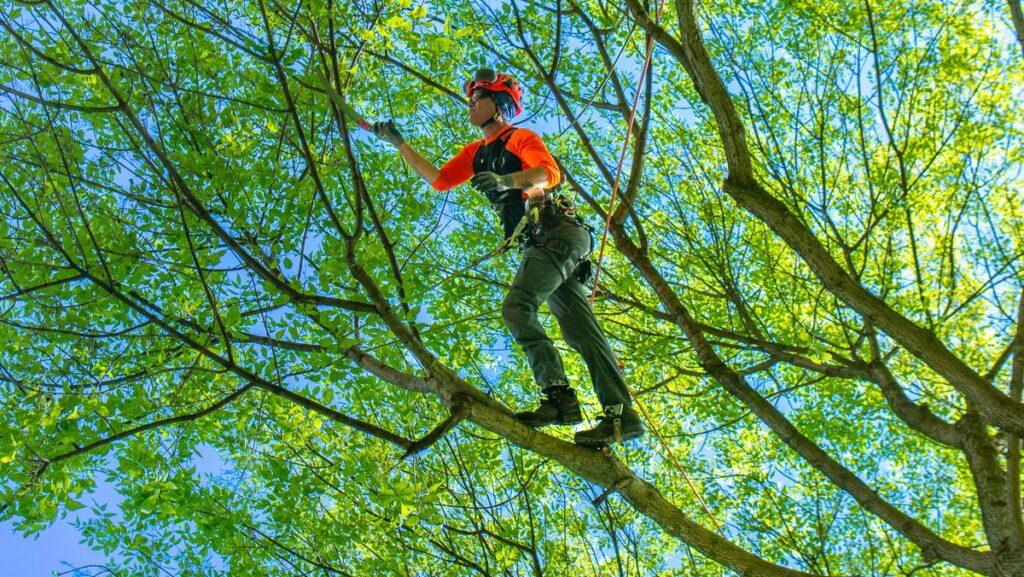
- Rigging equipment including pulleys, ropes, and harnesses for precision lowering
- Stump grinders with sufficient power to eliminate large root systems
- Wood chippers capable of processing substantial branch volumes
Professional-grade equipment allows crews to dismantle large trees section by section, preventing uncontrolled falls that could destroy landscaping, damage structures, or injure bystanders. Companies investing in modern machinery demonstrate their commitment to safe, efficient operations.
Matching Equipment to Tree Conditions
Different tree conditions demand specific equipment approaches. A storm-damaged tree leaning toward a house requires crane assistance to remove weight-bearing limbs before felling the trunk. A healthy but oversized tree in an open yard might only need climbing gear and strategic cutting. Experienced professionals select the right tools for each unique situation, avoiding the one-size-fits-all mentality that leads to accidents
How Can Customer Reviews Help In Choosing A Tree Removal Company?
Customer reviews for tree removal serve as direct evidence of a company’s reliability and quality of work. Reading through detailed feedback from previous clients reveals patterns in service delivery, professionalism, and problem-solving abilities that marketing materials rarely capture.
Positive reviews typically highlight specific aspects worth noting:
- Punctuality and adherence to quoted timelines
- Communication quality throughout the project
- Crew professionalism and property respect
- Accuracy of initial estimates versus final costs
- Thoroughness of cleanup after removal
References for tree services provide an opportunity to ask targeted questions about your specific concerns. When a company offers references, contact at least two or three past clients to inquire about their experience with similar tree sizes or challenging conditions. Ask whether the crew handled unexpected complications professionally and if the final result met expectations.
Where to Find Trustworthy Reviews
Multiple platforms offer insights into tree removal companies, though not all sources carry equal weight. Google Business reviews often provide the most comprehensive feedback since they require verified accounts and allow detailed responses. Check for patterns across multiple reviews rather than focusing on isolated complaints or praise.
Industry-specific platforms like Angie’s List and HomeAdvisor feature verified customer feedback with detailed project descriptions. These services often include photos of completed work, giving visual confirmation of the company’s capabilities with large tree removals.
Local community forums and neighborhood social media groups frequently contain candid discussions about tree service experiences. Residents share unfiltered opinions about companies they’ve hired, including details about pricing transparency and unexpected issues that arose during removal.
Evaluating Review Quality
The most valuable reviews contain specific details rather than generic praise. Look for mentions of the tree’s size, complexity of the removal, and how the company handled site-specific challenges. Reviews describing large tree removals similar to your situation provide the most relevant insights.
When evaluating potential companies, consider asking targeted questions based on these reviews. This can help you gain deeper insight into their operations and customer service standards.
Pay attention to how companies respond to negative reviews. Professional services address complaints constructively and explain their resolution process. Companies that ignore criticism or respond defensively may lack the customer service standards necessary for complex projects.
Recent reviews matter more than older feedback, as they reflect current crew quality, equipment condition, and business practices. A company with excellent reviews from five years ago but declining ratings recently may have experienced changes in ownership or staff quality.
Why Should Cleanup Services Be Included In Tree Removal?
Tree removal cleanup services transform a potentially hazardous worksite back into a safe, attractive property. Without proper cleanup, your yard becomes littered with wood debris, sawdust, and scattered branches that create tripping hazards and diminish curb appeal.
Property neatness after tree removal directly impacts both safety and aesthetics. Large tree removals generate substantial debris—including massive trunk sections, branches, leaves, and wood chips that can cover significant portions of your landscape. This debris attracts pests, blocks pathways, and creates fire hazards in dry conditions.
What Does Comprehensive Cleanup Involve?
Professional cleanup services handle every aspect of post-removal restoration:
- Complete debris removal including all branches, logs, and wood chips from the property
- Stump grinding or removal to eliminate tripping hazards and free up usable space
- Yard restoration by raking and clearing sawdust, leaves, and small debris
- Haul-away services that dispose of all materials responsibly
- Final inspection to ensure no hidden debris remains in flower beds or gutters
In cases where storm damage is involved, effective storm damage cleanup becomes crucial. This includes additional considerations such as dealing with fallen trees or branches that may have caused further damage to your property.
How Does Cleanup Protect Your Investment?
Leftover debris damages your lawn and landscaping. Heavy logs compress soil and kill grass underneath, while decomposing wood attracts termites and carpenter ants. Wood chips scattered across flower beds smother plants and create uneven surfaces that complicate mowing.
Choosing the Best Tree Removal Service for Large Trees means selecting companies that include thorough cleanup as standard practice. Request detailed information about their cleanup process before signing contracts. Companies that view cleanup as an afterthought often leave homeowners scrambling to rent equipment or hire additional services.
Quality tree removal services recognize that their job isn’t complete until your property looks better than before the tree became a problem.
Click here for more Choosing the Best Tree Removal Service for Large Trees