
What catches many workplaces off guard is how quickly “generally tidy” turns into “quietly unhygienic.” It is not always obvious. A desk can look clean while the shared touchpoints are doing the real damage behind the scenes.
This is where a simple, consistent cleaning system matters more than big once a month deep cleans. High traffic offices do not need perfection. They need rhythm. A plan people can actually stick to.
How does high foot traffic change what “clean” means in a CBD office?
In quieter workplaces, cleaning often focuses on visible tasks such as vacuuming floors, emptying bins, and maintaining bathrooms. However, in busy commercial environments with continuous foot traffic, cleanliness extends beyond appearance to include surface hygiene, strategic scheduling, and managing recontamination risks. Professional office cleaning Sydney CBD services are designed to address the unique demands of high-activity office spaces.
High traffic offices usually see:
- Faster spread of germs through shared touchpoints
- More dust and grit tracked in from the street and lobbies
- More kitchen mess, more bathroom use, more bin overflow
- More smells, especially around food waste and bathrooms
So the priority shifts. It is less about occasional major resets and more about preventing buildup. The office might look okay at 10 am, but by 2 pm the kitchen bench, tap handles, and meeting room table can already be a problem again.
Which areas get dirtiest first in busy Sydney CBD workspaces?
Some areas always get attention because they are visible. Reception, boardroom, the main walkway. But the dirtiest spots are often the ones people touch constantly and no one thinks to disinfect.
The usual suspects:
- Lift buttons inside the office tenancy (if any) and entry buzzer panels
- Door handles, push plates, and shared cupboard handles
- Meeting room tables, chair arms, whiteboard markers, remotes
- Kitchen taps, fridge handles, microwaves, coffee machine buttons
- Printer screens and keypad panels
- Bathroom taps, flush buttons, locks, and baby change surfaces
- Shared stationery and hot desk equipment
If they are trying to reduce sickness and keep the space genuinely hygienic, those touchpoints need a daily plan, not a “when someone remembers” plan.
What daily cleaning tasks keep high traffic offices under control?
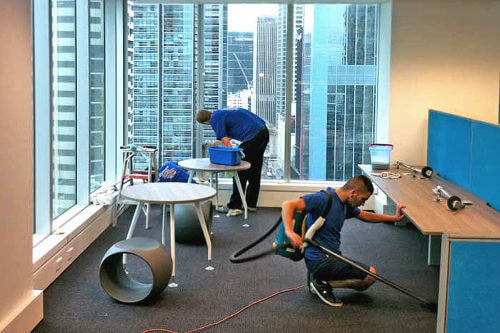
Daily cleaning is what stops the office from slowly sliding downhill. The goal is to keep the environment stable, even when the team is busy and no one has time to think about hygiene.
A practical daily checklist usually includes:
- Empty all general waste and food bins, replace liners
- Vacuum high traffic zones and entry points
- Spot mop hard floors where grit and spills show up
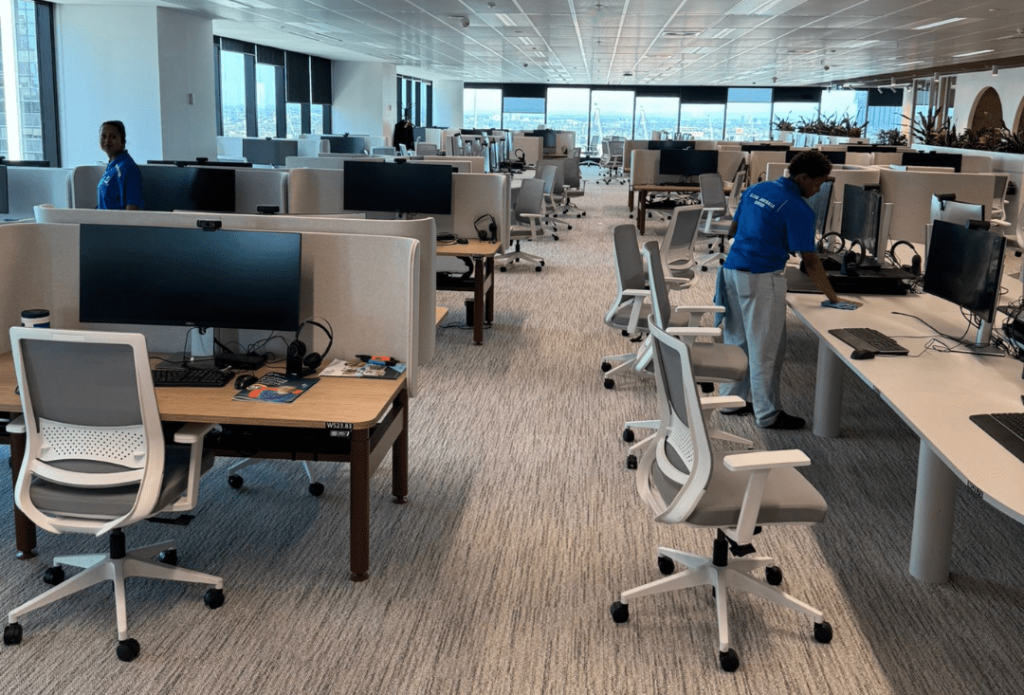
- Disinfect touchpoints (handles, taps, buttons, printer area, kitchen surfaces)
- Clean and restock bathrooms, including soap and paper supplies
- Wipe kitchen benches, sinks, splashbacks, and shared tables
If they only do one extra thing daily, it should be touchpoint disinfecting. That is the part that actually changes outcomes.
How often should they schedule deep cleaning for CBD offices?
Deep cleaning is not about making things look nice for visitors. It is about removing buildup that daily cleaning cannot reach. Think grime in corners, stains that keep returning, dust that slowly coats vents and ledges.
A common schedule for CBD offices looks like:
- Weekly: detail bathrooms, kitchen appliances external wipe down, skirting checks
- Fortnightly: internal glass, partitions, high dusting, spot carpet treatment
- Monthly: thorough floor care, detail kitchen (inside microwave and fridge clean outs if agreed), vents and ledges
- Quarterly: carpet steam cleaning and any specialist floor treatment
- Bi annually: full high dusting, upholstery refresh, detailed workstation clean (often after hours)
The right frequency depends on headcount, visitors, whether they hot desk, and if food is eaten at desks. If the space hosts clients often, they usually need a slightly tighter schedule just to keep presentation consistent.
What rules help teams keep shared kitchens and bathrooms cleaner?
Professional cleaning can help maintain office kitchens, but day-to-day employee behaviour has a major impact on overall cleanliness. Simple habits like washing dishes promptly and wiping down benches contribute to a more usable space. Learn more at: https://www.foodstandards.gov.au/business/food-safety/health-and-hygiene-advice-for-food-handlers
A few rules that actually work, because they are simple:
- They should keep bench clutter minimal. Less stuff means faster cleaning.
- They should use signage that is specific, not passive. “Wipe spills immediately” beats “Keep kitchen tidy.”
- They should schedule a weekly fridge clean out with a clear discard time.
- They should provide enough bins, especially food waste bins, and place them where people naturally stand.
- They should stock cleaning wipes and paper towel visibly, not hidden under the sink.
- They should make dish policy clear. Either no dishes left overnight, or dishwasher must be run daily.
Bathrooms are similar. If supplies run out, hygiene collapses fast. A simple restock routine, plus quick daytime checks in larger offices, prevents the worst issues. No one wants to be the person reporting there is no soap. So it needs to be automatic.
How can they maintain cleanliness without disrupting the workday?
In Sydney CBD, timing is half the battle. People are in meetings. They are on calls. They do not want vacuums during focus time or cleaners moving around in the middle of a client presentation.
Most offices reduce friction by:
- Scheduling heavier work after hours (vacuuming, mopping, bathrooms)
- Doing light daytime touchpoint cleaning at low traffic times (late morning or mid afternoon)
- Using quieter equipment where possible
- Setting “cleaning windows” for meeting rooms, like 10 minutes between bookings
- Creating a simple process for staff to report spills or urgent issues quickly
When disruption is low, consistency becomes easier. And consistency is the whole point.
What should they look for in an office cleaning plan for Sydney CBD?
A good plan is not just a list of tasks. It is coverage, frequency, accountability, and clarity. Especially in high traffic buildings, they need a plan that matches reality, not best case scenarios.
They should look for:
- A clear scope that includes touchpoints, not only floors and bins
- Defined frequencies (daily, weekly, monthly) and what each actually includes
- A method for quality checks, not just trust
- Flexibility for events, end of lease needs, or sudden increases in office attendance
- Security and access handling, since CBD buildings often have strict procedures
And quietly, they should also look for whether the plan will still work when the office is busy. If it relies on staff doing a bunch of extra steps, it usually fails after week two.
How do they keep the office looking professional for clients and staff?
Cleanliness is not only about hygiene. It is also about confidence. People walk into a space and decide, immediately, whether it feels organised, cared for, and professional.
If they want the office to consistently look sharp, they should prioritise:
- Reception and entry glass, because smudges show instantly
- Meeting rooms, especially tables, chairs, and presentation equipment
- Bathrooms, because nothing kills trust faster
- Kitchen smells and bin management
- Floors near entrances, where grit and marks make the whole office feel dirtier
A clean office does not need to feel sterile. It just needs to feel looked after. Like someone is paying attention. In high traffic Sydney CBD workplaces, that attention comes from a routine that repeats, holds up, and does not rely on luck.
Click here to explore warehouse cleaning compliance requirements guide.
FAQs (Frequently Asked Questions)
How does high foot traffic impact cleanliness standards in Sydney CBD offices?
High foot traffic in Sydney CBD offices shifts the definition of ‘clean’ from just visual tidiness to focusing on surface hygiene, timing, and preventing re-contamination. Offices experience faster germ spread through shared touchpoints, more dust from outside, increased kitchen and bathroom mess, bin overflow, and odors. Therefore, cleaning priorities emphasize consistent surface disinfection and preventing buildup rather than occasional deep cleans.
Which areas in busy Sydney CBD workplaces tend to get dirty the fastest?
The dirtiest spots are often high-touch shared surfaces that people frequently contact but may overlook for disinfection. These include lift buttons inside the tenancy, entry buzzer panels, door handles and push plates, meeting room tables and chair arms, whiteboard markers, remotes, kitchen taps and appliances like fridges and microwaves, printer screens and keypads, bathroom fixtures including taps and flush buttons, baby change surfaces, as well as shared stationery and hot desk equipment.
What daily cleaning tasks are essential for maintaining hygiene in high traffic offices?
Daily cleaning should focus on stabilizing the environment by emptying general waste and food bins with liner replacement; vacuuming high traffic zones; spot mopping hard floors where grit or spills appear; disinfecting all shared touchpoints such as handles, taps, buttons, printer areas, and kitchen surfaces; cleaning and restocking bathrooms including soap and paper supplies; wiping down kitchen benches, sinks, splashbacks, and shared tables. Prioritizing touchpoint disinfection daily is critical for effective hygiene outcomes.
How frequently should deep cleaning be scheduled in Sydney CBD office environments?
Deep cleaning frequency depends on factors like headcount, visitor volume, hot desking practices, and food consumption at desks. A common schedule includes weekly detailed bathroom and kitchen appliance wipe downs; fortnightly internal glass and partition cleaning plus high dusting; monthly thorough floor care and kitchen deep cleans; quarterly carpet steam cleaning and specialist floor treatments; biannual full high dusting, upholstery refreshes, and detailed workstation cleans often done after hours. Client-facing spaces may require tighter schedules to maintain presentation standards.
What practical rules help teams keep shared kitchens and bathrooms cleaner throughout the workday?
Effective rules include minimizing bench clutter to facilitate faster cleaning; using specific signage like ‘Wipe spills immediately’ instead of vague reminders; scheduling weekly fridge clean-outs with clear discard times; providing sufficient food waste bins placed where people naturally stand; visibly stocking cleaning wipes and paper towels rather than hiding them under sinks; enforcing clear dish policies such as no dishes left overnight or running dishwashers daily. For bathrooms, maintaining automatic restocking routines for soap and paper supplies with quick daytime checks prevents hygiene lapses.
How can office cleanliness be maintained without disrupting employees’ work routines in Sydney CBD offices?
Maintaining cleanliness without disruption involves scheduling heavier tasks like vacuuming, mopping, and bathroom cleaning after hours; performing light daytime touchpoint disinfecting during low-traffic periods such as late morning or mid-afternoon; using quieter equipment when possible to reduce noise disturbances; setting designated ‘cleaning windows’ between meeting room bookings (e.g., 10 minutes) to allow unobtrusive cleaning; and establishing simple processes that integrate smoothly into daily workflows to minimize friction during busy workdays.